DeKalb IL Epoxy Flooring brings more than 20 years of resin work to epoxy-flooring in West Dundee, and on this page we want to talk about one kind of wear most quotes never mention. Cleated shoes put a person’s whole weight onto a few small points, and a coated floor feels that long before it feels anything else in the room.
That matters in a house where golf shoes, baseball spikes and soccer boots go on and off at the same spot every weekend. It also matters at any small building where people walk in from a field or a course. A thin, glossy coat is the wrong answer there, and we would rather say so before the proposal than after the first season.
What follows explains how golf clubs handle the problem, where the same load shows up on a home floor, and how we build the coating differently in that one zone. Every proposal we write names the product, the system build and the finished thickness, so you can check the cleat zone against what was promised.
Randall Oaks Golf Club and Why Clubhouses Floor for Spikes
The clearest local example of a floor built around cleats is a golf clubhouse, and West Dundee has one of the area’s best known. Golf facilities have treated spike traffic as its own flooring category for a long time, and the reasons carry straight over to a garage or mudroom.
An 18-hole course on Binnie Road
Randall Oaks Golf Club sits at 4101 Binnie Road and is a facility of the Dundee Township Park District. The park district describes it as an 18-hole championship course, and its pro shop sells men’s and women’s golf shoes along with apparel, balls and clubs. The village’s own financial report lists Randall Oaks Golf Center among West Dundee’s principal employers, with 80 employees.
We have no connection to the course and have not seen its floors. We mention it because a place like this is built around the exact traffic pattern we are describing: people changing into cleats, walking a short path, and changing back.
Why golf clubs buy spike-resistant floors
Flooring suppliers that serve country clubs sell rubber tile described as resistant to damage from golf spikes, dropped golf bags and heavy foot traffic. Other vendors sell spike-resistant matting and carpet for pro shops and locker rooms. Clubs choose those surfaces because the shoe, not the foot traffic count, is what wears a floor out.
Metal spikes are banned at most courses now, and soft spikes are the common rule. Soft spikes still concentrate a golfer’s weight onto a ring of small plastic points, and every step twists slightly on them.
What a cleat does to a hard coating
On a resin floor, that twisting point load shows up as fine scratches and dull scuffs before any real wear reaches the body coat. A high-gloss finish shows it fastest, because every scratch breaks the shine. The marks follow the path from the bench to the door almost exactly, which makes the cleat zone easy to predict and easy to plan for.
Looking for epoxy-flooring closer to Montgomery? See Montgomery Epoxy-Flooring.
Where Cleats Meet a West Dundee Home Floor
West Dundee housing runs from old river-town homes near the Fox River to newer townhomes going up at Hickory Glen and Harvest View. Most of those homes have one place where sports shoes change, and that is where we look first when a family plays golf or puts kids on a field.
The changing bench in the garage or mudroom
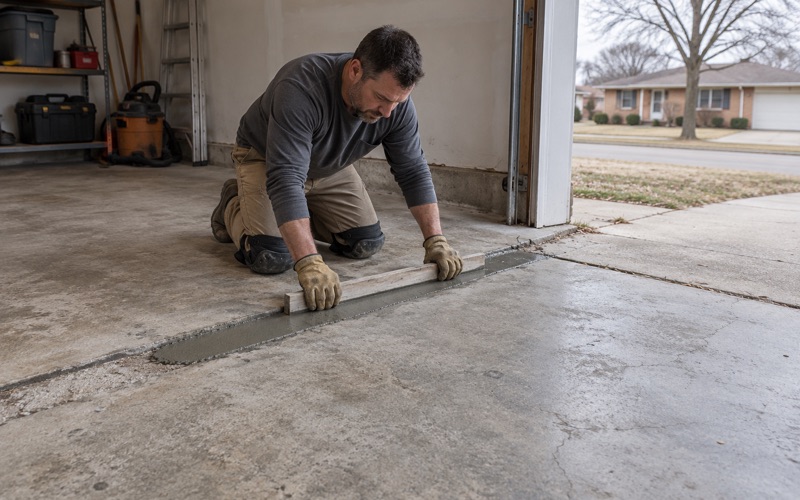
The usual spot is a bench or step just inside the garage service door, or a mudroom bench off the garage. Someone sits, laces up, stands, and walks out across a few feet of floor in cleats. Coming home, the same steps happen in reverse.
That strip of floor takes more cleat contact in a single season than the rest of the garage sees in years. When we walk a West Dundee garage, we ask where the bench is, which door the family uses on game days, and whether golf bags lean against a particular wall.
Clubhouse service entries and team gear rooms
The same pattern appears in small commercial rooms: a clubhouse service entry, a team equipment room, a coach’s office at a field, or the back hallway of a business whose staff play on a league. The cleat path is short and fixed, so the heavier build only has to cover a defined area.
Those floors also have to stay open during the season. We schedule around the hours a building has to run, including overnight and weekend windows.
Reading the slab before we quote
Before any coating talk, we read the cracks, joints and any old coating, and we say plainly when a slab needs repair or replacement first. The village’s detached-garage permit sheet shows a 4-inch slab with welded wire fabric over at least 4 inches of granular fill, sloped toward the doors. Older homes near the historic district may sit on slabs with no such record.
Moisture testing is a written line item in every scope. We use the ASTM F1869 calcium chloride test, relative humidity probes under ASTM F2170, or the ASTM D4263 plastic sheet test, depending on the slab.
Building a Thicker, Textured Coating in the Cleat Path
A coating carries no spike-resistance rating, and we will not pretend otherwise. What we can do is build the cleat zone with more material, more texture and a tougher topcoat than the rest of the floor, so the scuffing stays cosmetic and the body coat stays intact.
Grinding the slab open
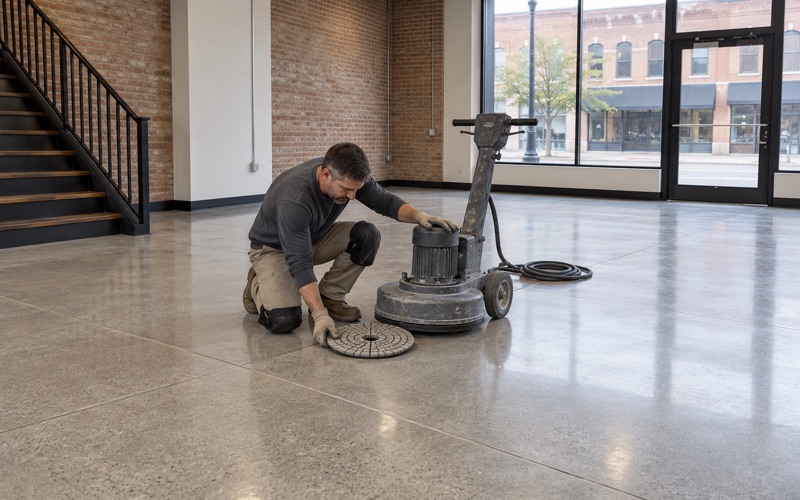
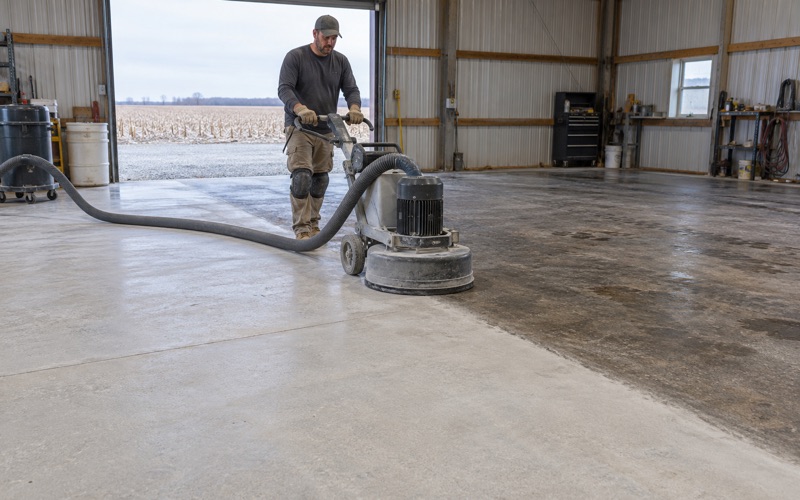
Every slab is opened with a diamond grinder or shot blaster to a measured ICRI CSP profile, and we never acid etch. In the cleat zone we take the profile a little deeper, because a heavier coat needs more surface to grab. Grinding dust is collected at the grinder and never washed toward a floor drain.
Body coat thickness and broadcast texture
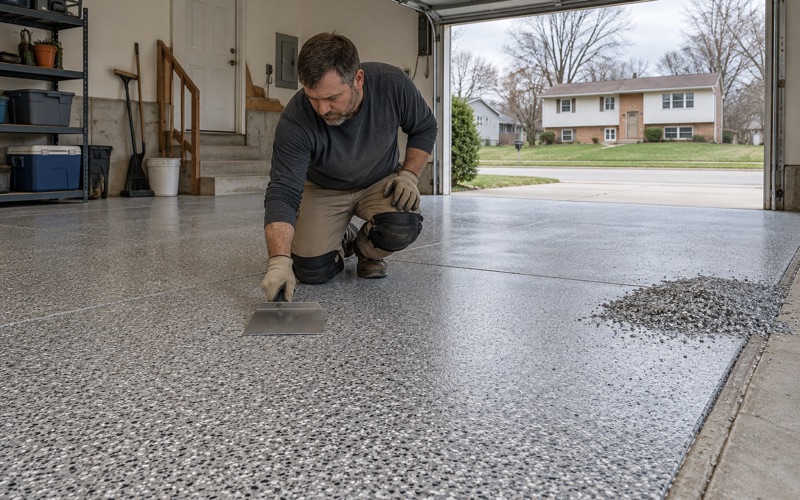
Where the rest of the garage might get a standard 100% solids epoxy body coat with a vinyl flake broadcast, the bench and door path get a thicker build. A quartz aggregate broadcast locked into that coat gives texture that hides scratch marks and gives a cleat something to bite.
The proposal states the finished thickness for each zone separately. That way the heavier strip is something you can check, not something that was described at the table and then thinned out on the day.
Topcoat choice where shoes change
A polyaspartic or polyurea topcoat over the textured zone holds up to scuffing better than a soft finish, and a satin sheen shows scratches far less than a full gloss. On many West Dundee garages we run satin through the cleat path and match it across the whole floor so the zone does not read as a patch.
Garage floors here also take calcium chloride brine and rock salt on the tires all winter. The same topcoat that handles cleats has to handle that, so we specify both loads together. Every coating we use stays within the Illinois VOC limit for floor coatings, which binds the installer as well as the manufacturer.
Curing against the slab, not the calendar
We schedule cure by slab temperature and the dew point spread at the surface. The nearest long-term weather station, in Elgin, puts the median last spring freeze on April 26 and the first fall freeze on October 18. An unheated West Dundee garage outside that window may have to wait for spring, and we say so when it does.
Mats, Knock-Off Spots and a Floor That Lasts the Season
The coating is only half of the answer. Clubs pair hard floors with mats at the door, and a house can do the same for very little money.
A mat at the bench
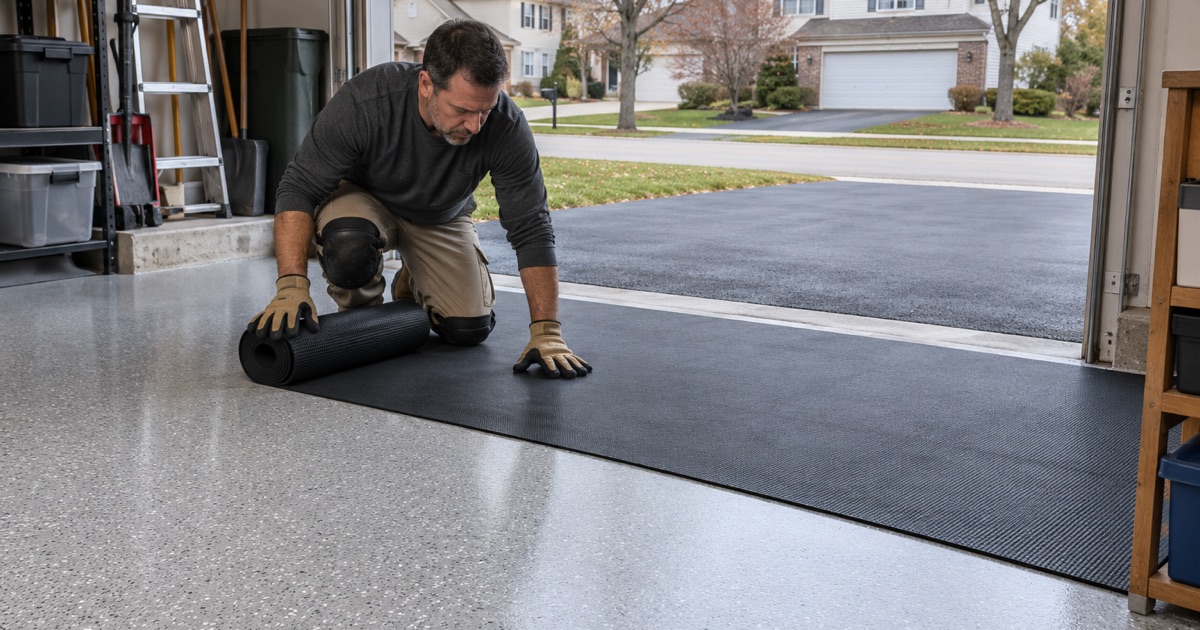
A rubber mat where shoes go on and off takes the first and hardest cleat contact, which is the twist of standing up. Choose one with a beveled edge and a backing that will not trap water against the coating. Lift and dry it after wet rounds so moisture does not sit under it for days.
Knocking cleats clean outside
Knock cleats against a step or a boot scraper outside the door, not on the coated floor. Change into street shoes before crossing the rest of the garage when you can. Those two habits do more to keep a floor looking new than any extra coat.
Paperwork, permits and who to call in West Dundee
Every home job gets a written contract and the state’s Home Repair: Know Your Consumer Rights pamphlet before work starts, as the Illinois Home Repair and Remodeling Act requires. Warranty exclusions are read to you before the job is sold, with moisture named first.
Illinois issues no license for flooring or coatings work. West Dundee’s Community Development Department handles permits through the village’s online portal and can be reached at 847-551-3805, and we confirm the village’s registration, bond and insurance rules before a West Dundee job is scheduled. Prices are quoted per square foot for the exact system proposed, cleat zone included.
- 20+ Years of Floor Work
- Moisture Testing in Every Scope
- Written Proposals and Contracts