DeKalb IL Epoxy Flooring brings more than 20 years of epoxy flooring work to West Chicago, coating garage, basement and shop floors for homeowners who want a surface that stands up to tires, salt and daily use. Every system we install is bonded to the concrete you already have. We prepare the slab, test it, coat it and leave it in place.
That last point matters more in this city than most, and it shapes how we scope a job here. A floor coating is a surface trade: it lives on the top fraction of an inch of a slab and never reaches the ground below it. Anything that breaks the concrete and digs is a different kind of project with different rules, and we keep the two clearly apart in every proposal.
Before we quote, we walk the floor, read the cracks, joints and any old coating, and tell you plainly if the slab itself needs repair or replacement first. The written proposal then names the product, the system build and the finished thickness, so you can hold the finished floor up against what was promised.
West Chicago’s Thorium History and the Residential Cleanup
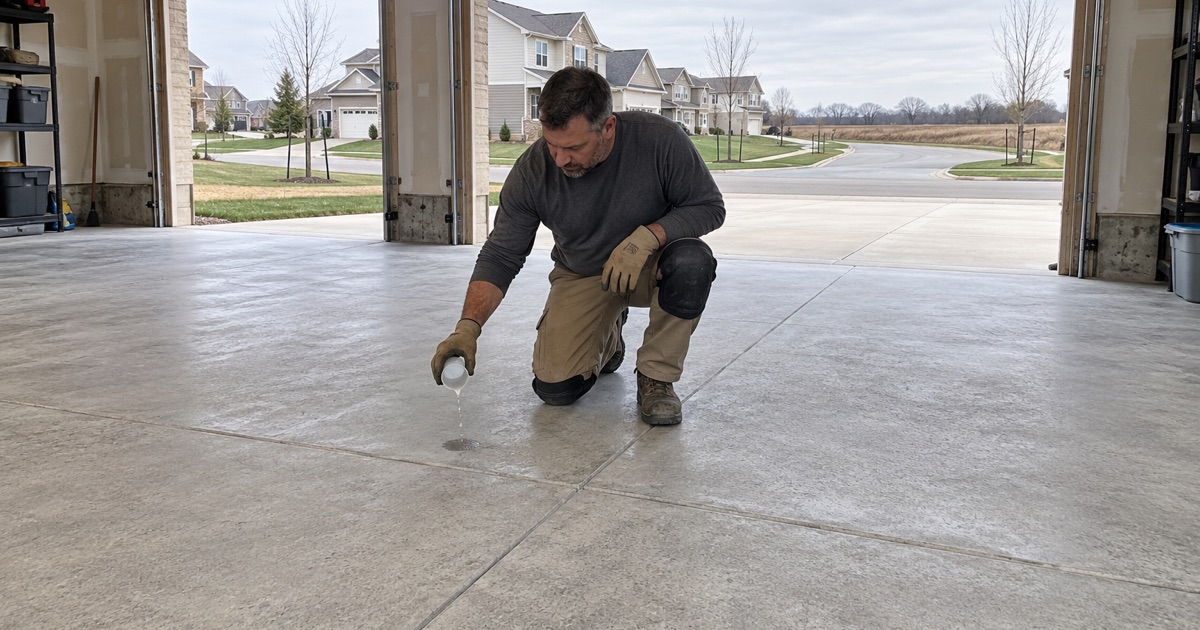
Most homeowners we meet in West Chicago already know the outline of this story, but it helps to set it down accurately, because it explains why we draw such a firm line between coating a floor and digging under one.
What the Rare Earths Facility left behind
From 1932 to 1973 a processing plant in town, known as the Rare Earths Facility, refined thorium. The EPA describes four Kerr-McGee Superfund sites in the West Chicago area that were contaminated by radioactive thorium waste from that operation. Kerr-McGee bought the plant in 1967, ran it until 1973 and later settled with the city over the cleanup.
Over the decades, tailings from the plant were used as fill. Reporting by Borderless Magazine in 2022 noted that residential areas and the sewage treatment plant were among the places that received thorium tailings as fill. That history is public record, and it is the reason the federal cleanup reached into neighborhoods rather than stopping at the factory fence.
What the cleanup removed, and when
The Kerr-McGee Residential Areas site was placed on the National Priorities List in 1990, and removal of radioactive soil began in 1995. Cleanup of 670 residential properties was finished by 2003. In 2007 the EPA found 13 more homes above its standards, and those were cleaned by 2015.
The excavated soil was shipped to a disposal facility in Utah. Cleanup work also covered the factory site, Reed-Keppler Park and Kress Creek, and the park and sewage plant have since been delisted. We repeat these facts only as the public record states them; we make no judgment about any particular house, street or block.
Why a flooring contractor brings it up at all
We raise the history because a customer deserves to know where our work stops. Our scope is the top of the slab, and nothing we do disturbs what is underneath it. If a project ever turns toward breaking concrete and excavating, that is the moment a property’s cleanup record becomes relevant, and it belongs to a different contractor and a different permit.
We also do not test soil, we do not test for thorium and we do not excavate. Questions about a property’s history go to the agencies that ran the cleanup, not to a floor coater.
Looking for epoxy-flooring closer to Warrenville? See Epoxy-Flooring Services in Warrenville.
Surface Work: A Coating Stays on Top of the Slab
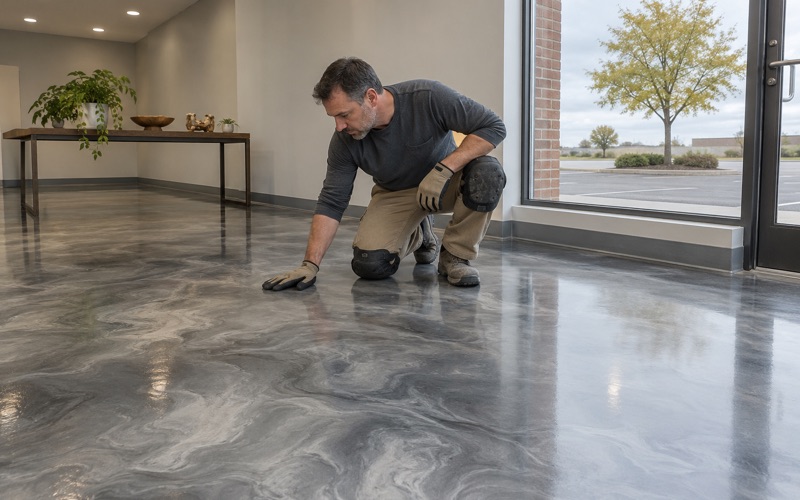
A resin floor is built in thin layers bonded to sound concrete. Done right, the job moves no soil, removes no concrete beyond a light surface profile and leaves the slab exactly where it was poured.
Opening the surface without breaking it
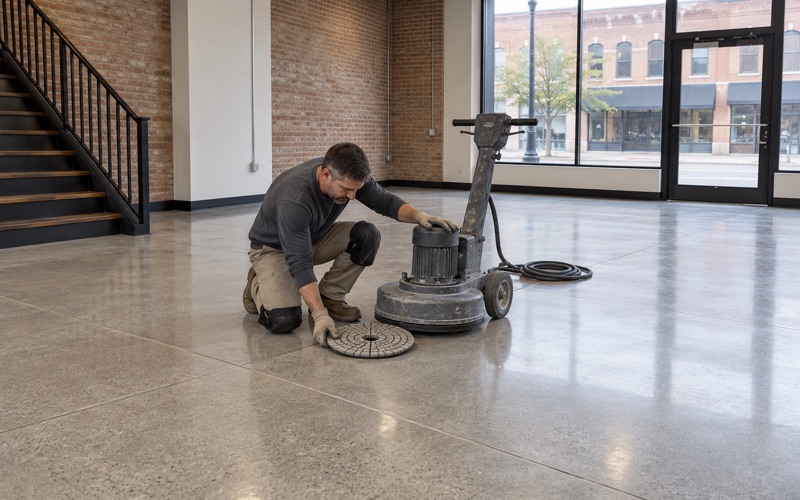
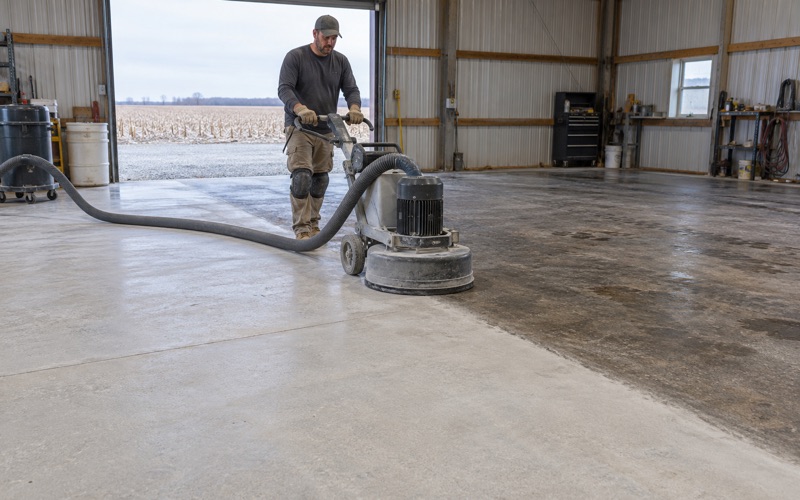
We open every slab mechanically with a diamond grinder or shot blaster, and we do not acid etch. The goal is an ICRI surface profile that gives the primer something to grip, typically a light texture rather than a deep cut. The concrete stays whole; we are taking off laitance, sealers and old coating, not structure.
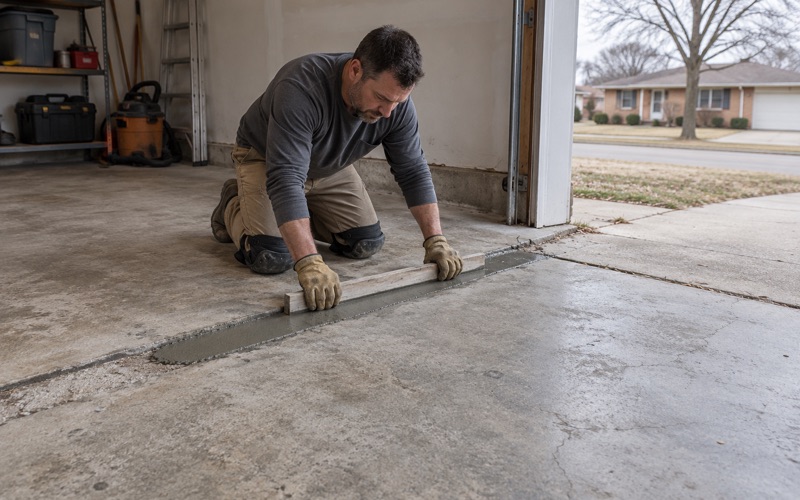
Where cracks or spalls need attention, we fill them from the top with repair mortar or a semi-rigid polyurea joint filler. A crack that is moving, heaving or wide enough to signal a failing slab is a different conversation, and we will tell you so instead of coating over it.
Moisture testing comes first
Moisture is the most common reason a coating lets go, so testing is a line item in our scope rather than an upsell after a failure. Depending on the slab, we use an ASTM D4263 plastic sheet test, ASTM F1869 calcium chloride vapor emission testing or ASTM F2170 in-situ relative humidity probes. When the numbers call for it, a moisture-mitigation primer goes down under the build coat.
Before the job is sold, we read the warranty exclusions out loud, and moisture is the first one named. You should know exactly what the system covers before you sign anything.
What a coating is not
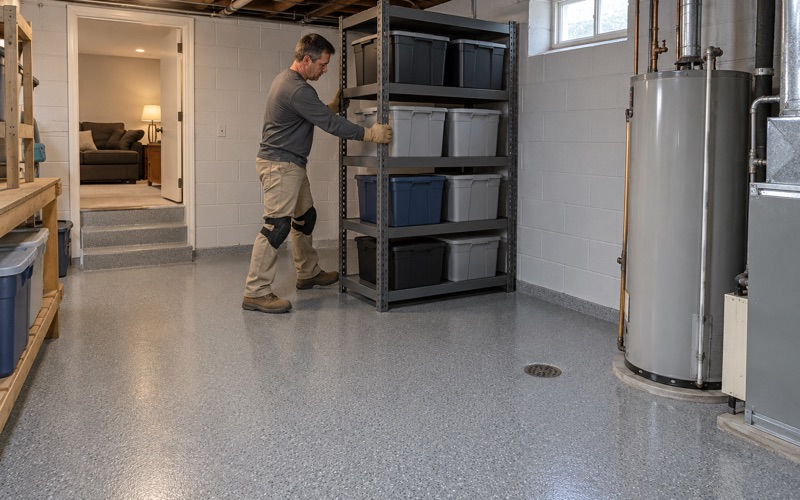
A floor coating is not waterproofing, and in a basement we start by asking where the water is coming from: a sump pit, drain tile, a grading problem or hydrostatic pressure under the slab. A coating does nothing to reduce radon either. In Illinois that work takes an IEMA radon mitigation license, and we do not sell an epoxy floor as a substitute for it.
We are equally plain that a coating does not address soil history of any kind. It is a durable, cleanable wearing surface, and that is the whole of what we promise.
When a Job Breaks the Slab: Permits and the Cleanup Record
Some floors cannot be saved with a coating. When a slab is badly heaved, crumbling or out of slope, replacement may be the honest answer, and that changes the paperwork and the questions to ask.
Flat work and remodels under the city’s permit list
The City of West Chicago’s Building Division lists work that needs a permit, including flat work such as driveways, patios and slabs, new or replacements of the same, and any remodeling work in basements, baths and kitchens. Flooring itself is not named on that list, and the city notes the list is not exhaustive. If you are unsure whether a project needs a permit, the Building Division at City Hall, 475 Main Street, is the office to call at (630) 293-2200 extension 131.
In practice, a tear-out and repour, a new pit or a basement remodel that opens the floor is a separate, permitted project. We coordinate around that work, but we do not perform the excavation.
Asking about cleanup history before anyone digs
If a job on your property will break concrete and remove the soil beneath it, that is the time to look into the property’s cleanup history. The residential cleanup covered hundreds of homes, and the public record is the right starting point for an owner planning excavation. We suggest raising it with whoever is doing that digging and with the city before work starts.
A coating job never reaches that point. Grinding a surface profile and applying resin leaves the slab intact and the ground beneath it untouched.
Contractor registration in West Chicago
Illinois issues no state license for flooring or coating contractors, so we confirm each municipality’s own rules before scheduling. In West Chicago, every contractor and subcontractor working in the city must register before a permit issues, with a 10,000-dollar surety bond and a certificate of insurance naming the City of West Chicago.
For home jobs, we also provide a written contract and the state’s Home Repair: Know Your Consumer Rights pamphlet before work begins, as the Illinois Home Repair and Remodeling Act requires.
Coating West Chicago Garages Under the 2021 Code
With the scope settled, the practical work in West Chicago is mostly garages and basements in owner-occupied houses. About 70.9 percent of homes here are owner-occupied and 67.2 percent are detached, so a two-car garage slab is the floor we see most.
Housing ages and the slabs they produce
The local housing stock spans several eras: 21.0 percent was built in the 1990s, 18.3 percent in the 1970s and 17.5 percent in the 2000s, with 12.3 percent dating to 1939 or earlier. A 1970s garage often carries decades of oil, sealer and patchwork, while a 1990s slab may be sound but sealed. Both get the same mechanical prep and testing; the difference shows up in how much repair the proposal includes.
Older basements in the prewar homes deserve extra care with moisture readings before any system is chosen. We would rather recommend waiting or mitigating than coat a floor that is going to push the film off.
Code updates that shape slab work
The city adopted the 2021 International Residential Code and International Building Code under Ordinance 23-O-0029, effective January 1, 2024, replacing the 2015 editions it had enforced. Those codes govern new and replacement slabs, garage construction and remodels. A coating applied to an existing floor does not change the slab’s slope, curb or structure, so the code bears on the work around our job rather than on the resin itself.
Where a new garage slab is being poured, we are glad to talk with the owner before the pour about finish, curing time and what makes a slab easier to coat later.
Winter salt, cold nights and curing
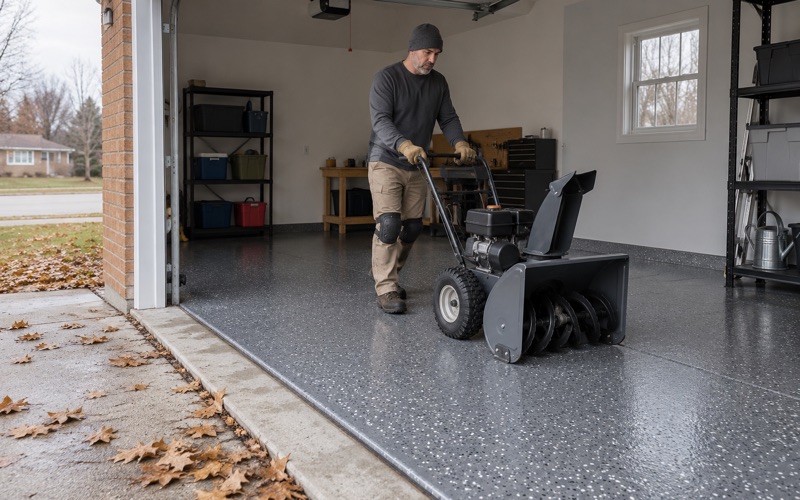
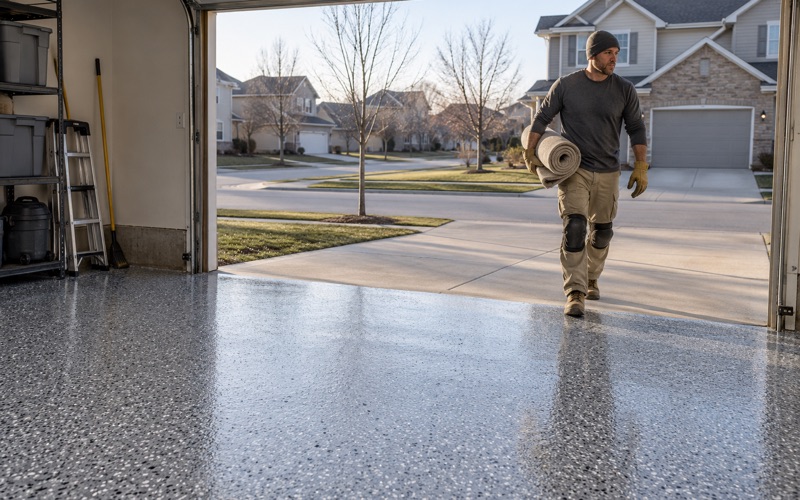
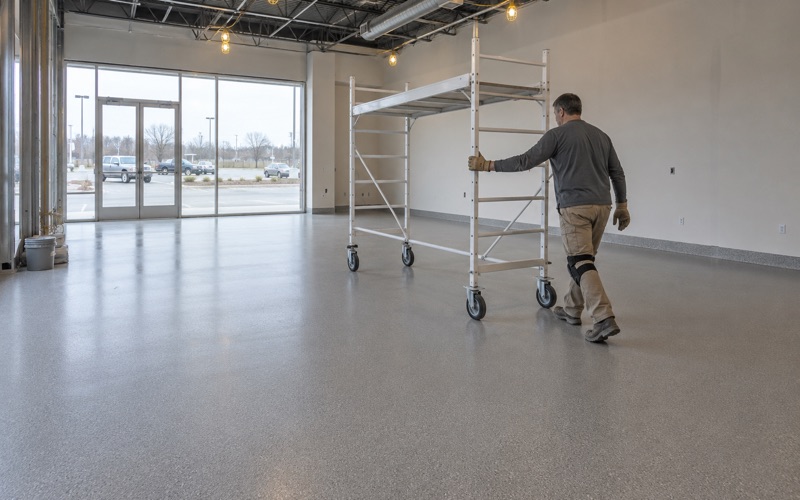
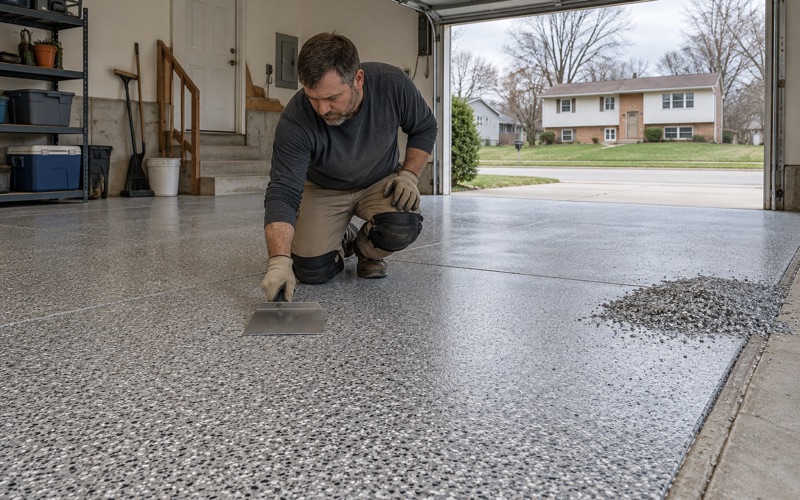
The DuPage Airport weather station sits inside the city limits, and its 1991-2020 normals record 133.9 days a year with a low at or below 32 degrees. That cold, and the calcium chloride brine and rock salt tracked in on tires, is what a West Chicago garage floor has to survive. We build garage systems with a 100% solids epoxy base, a vinyl flake or quartz broadcast and a polyaspartic or polyurea topcoat chosen to resist salt and hot tire pickup.
Curing is scheduled against slab temperature and dew point, not the calendar, and an unheated garage sometimes has to wait for spring. Every product we use is chosen within the Illinois VOC limits for floor coatings, which bind the installer as well as the manufacturer, and pricing is quoted per square foot for the system we actually propose.
- 20+ Years of Floor Work
- Moisture Testing in Every Scope
- Written Proposals and Contracts